

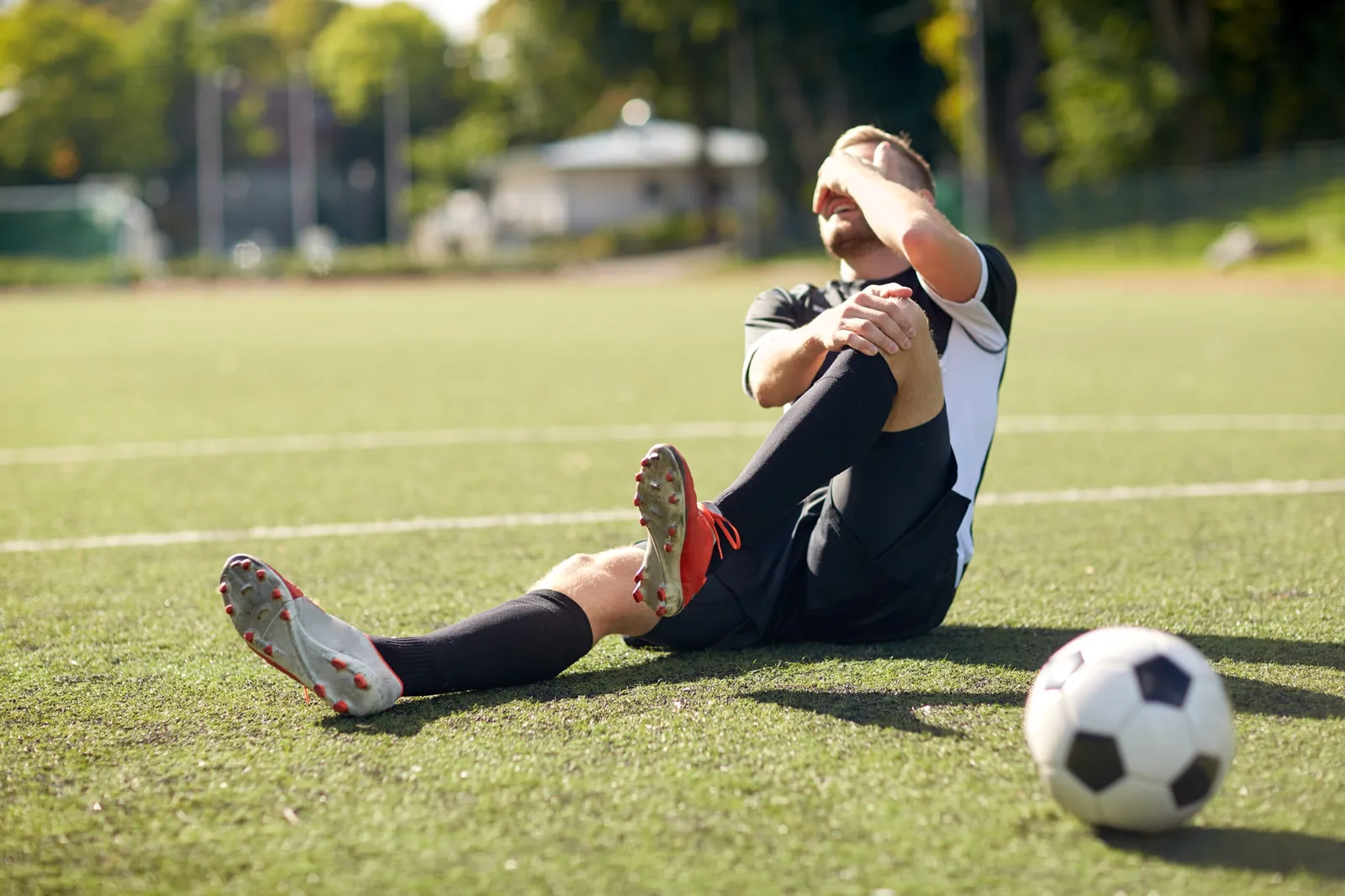
Have you suffered an ACL injury and are looking for guidance / information on the stages of your rehabilitation?
ACL rehabilitation is a structured, evidence-based process aimed at restoring knee stability, strength, movement control, and confidence—whether after ACL reconstruction surgery or non-operative management. Below is a clear, practical overview followed by the Physiotherapists here at Burton Clinic
Goals of ACL Rehab
- Reduce pain and swelling
- Restore full knee range of motion (ROM)
- Rebuild strength (especially quadriceps & hamstrings)
- Improve balance and neuromuscular control
- Safely return to sport or daily activity
- Prevent re-injury
Typical ACL Rehabilitation Phases
Phase 1: Acute / Protection Phase (Weeks 0–2)
Focus
- Control swelling and pain
- Achieve full knee extension
- Begin quad activation
Key Exercises
- Quad sets
- Heel slides
- Straight leg raises
- Ankle pumps
- Gentle weight-bearing as allowed
Precautions
- Avoid twisting or pivoting
- Use brace/crutches if prescribed
Phase 2: Early Strength & ROM (Weeks 2–6)
Focus
- Restore full ROM
- Improve walking pattern
- Begin closed-chain strengthening
Key Exercises
- Mini squats
- Leg press (light)
- Step-ups
- Hamstring curls
- Stationary cycling
Phase 3: Strength & Neuromuscular Control (Weeks 6–12)
Focus
- Build lower-limb strength
- Improve balance and knee control
Key Exercises
- Lunges
- Single-leg squats
- Balance board / single-leg stance
- Resistance training (progressive loading)
Phase 4: Running & Agility (Months 3–5)
Focus
- Prepare for sport-specific movement
Key Exercises
- Jogging → running progression
- Plyometrics (jump training)
- Lateral movements
- Agility drills
Criteria to Enter
- Minimal swelling
- Good single-leg strength & control
Phase 5: Return to Sport (Months 6–9+)
Focus
- Full performance & injury prevention
Key Components
- Cutting and pivoting drills
- Sport-specific training
- Psychological readiness
- Strength symmetry ≥90% vs. uninjured leg
Key Rehab Principles
- Progress based on function, not just time
- Quadriceps strength is critical
- Good movement quality matters more than load
- Rushing return to sport increases re-tear risk
Common Mistakes to Avoid
- Skipping early quad activation
- Not achieving full terminal knee extension
- Returning to sport too early
- Ignoring balance and landing mechanics
- Training pain instead of addressing swelling
If you are interested in finding out more details around ACL rehabilitation, book in a free discovery call today.
Request A Free Discovery Call
You’ve likely got questions like: How much will it cost? How many sessions will I need? What if it doesn’t work? Do I need a scan? We’ll cover all of that on your free discovery call so you make the very best decision on your health.